A Christmas Gift Wrapped in Misinformation
A recent response from the mayor offers an unexpected holiday gift: a clearer picture of how far removed Hardyston's leadership has been from the regionalization process.
Every now and then, a defensive response ends up proving the very point it was meant to deny.
This week was one of those moments.
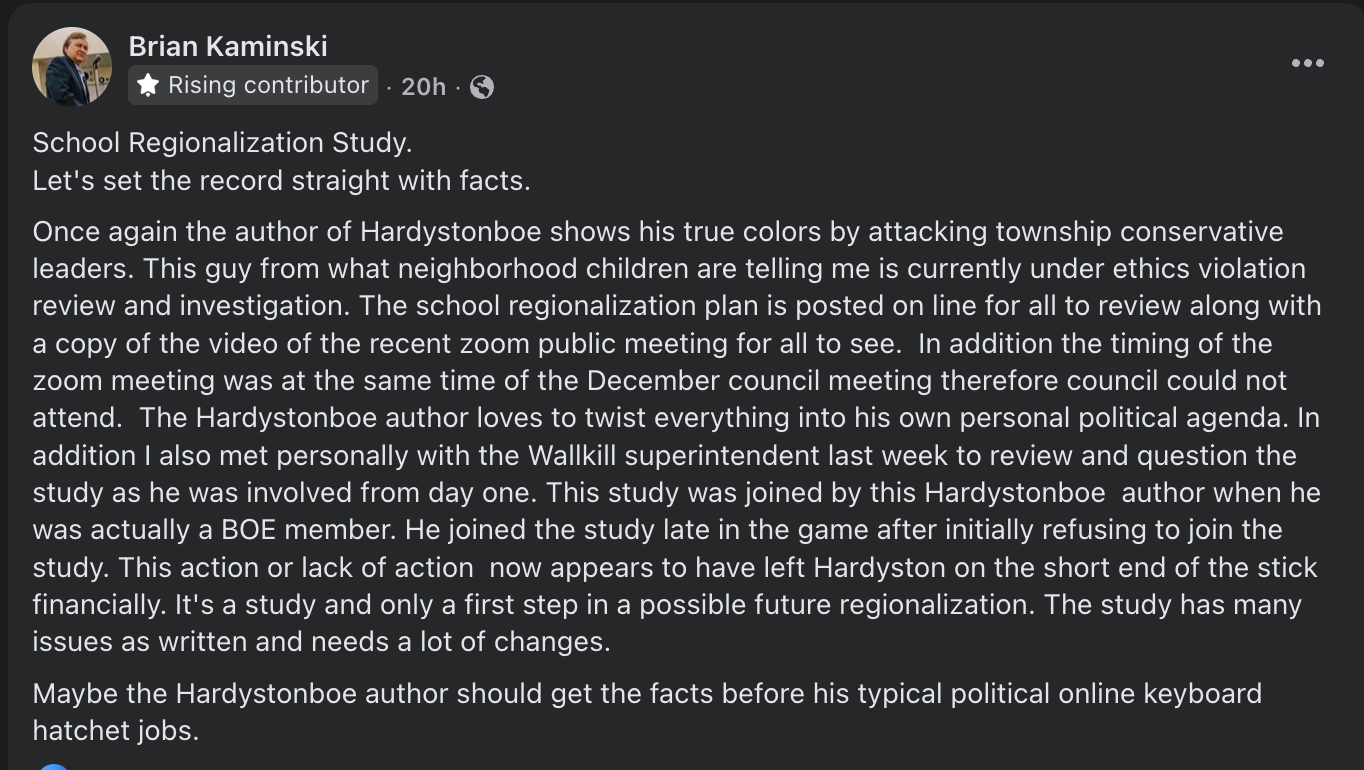
After a recent article noted Hardyston leadership’s absence from the regionalization meeting, Mayor Brian Kaminski responded with a lengthy post attacking motives and rewriting the timeline.
In the process, he highlighted exactly what residents have been saying: local leadership has been disconnected from the regionalization process.
Zoom Made Participation Easier - Not Harder
One of the mayor’s main defenses was timing. He said the regionalization meeting conflicted with the December council meeting.
What that explanation leaves out is important: the regionalization meeting was held online via Zoom and was open to the public. Leaders from other districts - including board presidents, board members, and municipal officials - logged in and participated despite the same constraints of time and schedule.
No one needed to be “sent” anywhere. The issue was choosing to join a conversation others clearly considered important.
Posting Links Is Not Participation
The mayor also noted that documents and a recording are online. True - and beside the point.
Regionalization is not a passive exercise. It is shaped by questions asked, concerns raised, and issues identified during public discussion. Watching a recording later or reading a report after the fact is not the same as being present when residents are engaging in real time.
Presence matters because it signals engagement. It tells the community leadership is listening in real time, not after positions harden.
The Personal Attacks Miss the Point
Rather than addressing why Hardyston’s board leadership - including Board President Donna Carey - and town council were absent, the mayor’s response pivoted to personal attacks and unrelated claims.
Those distractions do nothing to answer the central question residents are asking:
Why did leaders from other towns show up for the regionalization discussion, while Hardyston’s top leadership did not?
Questioning the author’s motives does not change attendance records. Raising unrelated accusations does not explain a lack of visible participation.
A Telling Distance From the Process
Perhaps the most revealing part of the mayor’s response was not what it said, but what it showed. It reflected a view of regionalization as something to be reacted to after the fact, rather than a process requiring consistent, visible involvement from the beginning.
Regionalization is complex. It involves governance, finances, educational programming, and long-term planning. That complexity is exactly why leadership presence during public discussion matters - especially in the early stages, when questions are still being formed and assumptions can still be challenged.
The Real Christmas Gift
If there is a silver lining here, it is clarity.
The mayor’s post unintentionally underscored how far removed Hardyston’s leadership has been from the regionalization process, while neighboring communities chose to engage directly. For residents trying to understand why concerns about representation and involvement keep surfacing, that contrast speaks louder than any rebuttal.
As the holiday season encourages reflection, many in the community hope this moment serves as a reminder: leadership is not demonstrated through posts written after the fact, but through presence when the conversation is happening.